
U.S. Nears Strategic Agreement with India: What It Means for International Politics
Keyword: U.S. nears agreement with India
With a fast-changing geopolitical climate, one of the developments that has made worldwide headlines is the report that the U.S. is on the verge of making a deal with India. Though more details are still emerging, the character and timing of this nascent agreement could have far-reaching implications for international trade, diplomacy, defense cooperation, and regional stability.
This blog dives into the context, content, and potential consequences of this growing partnership, offering insight into what such a deal might entail and why it matters—not just for the two nations, but for the world.
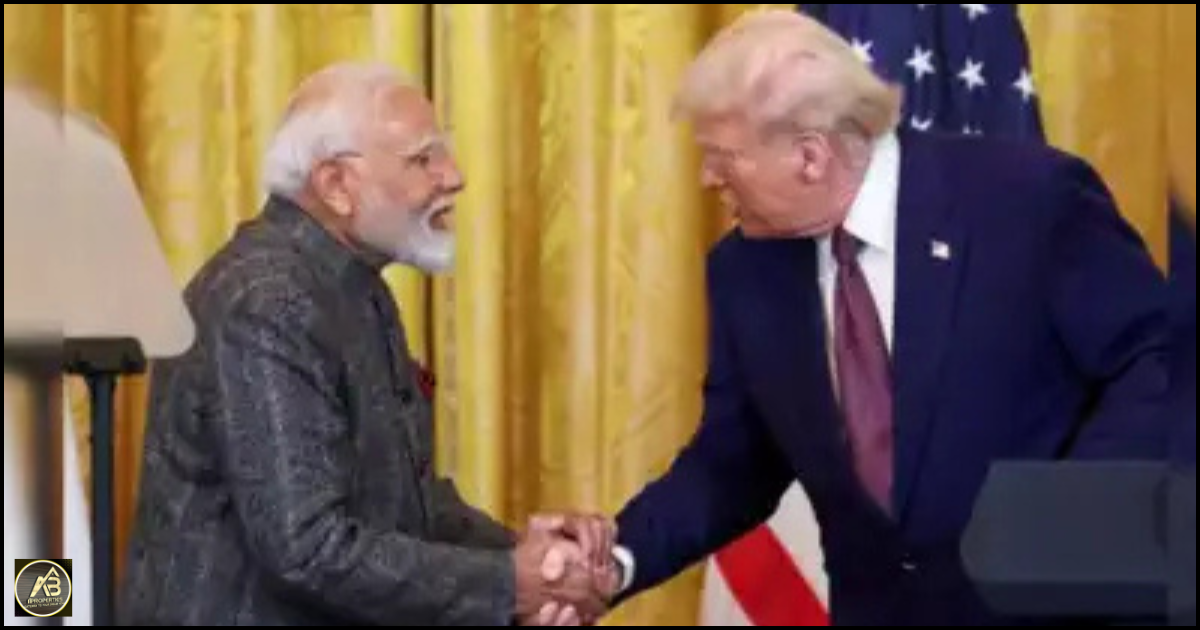
The U.S.-India Relationship: A Historical Overview
The US-India relationship has undergone a drastic transformation in the last twenty years. Previously characterized by careful diplomacy amid the Cold War, relations between Washington and New Delhi started warming up in the early 2000s, culminating in the 2005 US-India Civil Nuclear Agreement. Defense, economic, and technological cooperation has only intensified since.
Both nations are now leading democracies with mutual interests in maintaining regional stability in the Indo-Pacific, combating terrorism, and advancing free markets. The Biden government and India‘s leadership by Prime Minister Narendra Modi have shown a shared interest in enhancing cooperation.
What Type of Deal Is on the Table?
While official specifics are still under wraps, sources indicate that the U.S. is nearing a multi-faceted agreement with India that could span multiple major areas:
1. Defense and Security Cooperation
This would probably be the fulcrum of the deal. As Washington and New Delhi increasingly worry about China’s aggressive posturing in the South China Sea and on the India-China border, there is a perception that military cooperation is essential.
The agreement could entail:
Joint military exercises
More defense technology transfers
Co-development of sophisticated weapons systems
Increased intelligence sharing
India has already entered into foundational agreements such as COMCASA and BECA with the U.S., which open up the possibilities of secure communications and geospatial data sharing. The new agreement may take the envelope a little further.
2. Trade and Economic Growth
The U.S. and India have had a complex trade history, with tariffs and market access disagreements being a problem. But the two economies will benefit from more robust economic links. The potential agreement might involve:
Reduced tariffs on major products
Improved visa and investment regimes
Closer cooperation in semiconductor manufacturing and green technology
Partnerships in AI, digital infrastructure, and innovation
Such a structure would be good for U.S. pharma and tech firms while providing India with access to jobs and investment.
3. Climate and Clean Energy
As climate change continues to pose a global threat, the two countries are said to be negotiating cooperative clean energy projects.
These may include:
Collaborative investments in solar and wind power
Sharing technologies for electric vehicles (EVs)
Research collaboration on green hydrogen
Support for India‘s ambitious climate goals
This collaboration would mark global leadership in sustainable development, particularly in the run-up to critical international summits.
4. People-to-People Relations
With a large Indian diaspora in America, educational and cultural relations will likely be another support of the agreement.
Look for action on:
Relaxed visa norms for students and professionals
University cooperation and exchange programs
Healthcare and biotech collaborations, particularly post-COVID
Such connections are essential for long-term trust and influence-building.
Why This Deal Matters Now
Timing is a key element in international diplomacy.
There are a number of reasons why this American agreement with India seems very close and possible:
Geopolitical Realignment: As tensions between the U.S. and China grow, Washington wants trustworthy allies in the Indo-Pacific region. India, as a regional power with similar concerns over China, is a natural ally.
Counterbalancing China‘s Influence: A robust U.S.-India axis serves to counterbalance China‘s Belt and Road Initiative and China’s strategic dominance of important supply chains and infrastructure projects in Asia and Africa.
Energy Security: As global oil markets are strained by conflict and climate mandates, India‘s increasing energy requirements are well-suited to the U.S.’s energy exporting capabilities and green tech efforts.
Technological Competition: America views India as a leadership role in the global digital economy. On everything from 5G to AI, both nations can gain more profound tech collaboration.
Election-Year Strategy: Both President Biden and PM Modi could perceive a broad agreement as a victory for their domestic constituencies. For Biden, it enhances foreign policy credentials; for Modi, it underscores India‘s increasing international stature.
The Risks and Challenges
Although the report of the report is huge, it‘s not complication-free:
Bureaucratic Hurdles: Both governments will have to deal with complicated legal and regulatory systems to convert agreements into action.
Domestic Politics: Protectionist attitude in both countries may delay trade talks. Trade unions in the U.S. and domestic industries in India tend to resist liberalized trade terms.
Geostrategic Tensions: A publicly deepened US-India partnership would likely irritate Beijing and complicate India‘s highly calibrated foreign policy strategy, particularly its membership of BRICS and the Shanghai Cooperation Organisation (SCO).
Human Rights Issues: There could be issues raised by some in Washington about press freedom and the rights of minorities in India, to act as a point of contention within the US Congress.
Global Ramifications of the Agreement
A wide-ranging U.S.-India agreement would be a model for other strategic partnerships among great democracies. It would potentially:
Reroute Global Supply Chains: By prompting U.S. businesses to invest in India as a production base and cut their reliance on China.
Fortify the Quad Alliance: In conjunction with Japan and Australia, the agreement might strengthen the strategic interests of the Quadrilateral Security Dialogue (Quad).
Boost Multilateralism: India‘s growing clout and alliance with the U.S. can reboot international institutions such as the UN, WTO, and G20 with less homogeneous leadership.
Promote Technological Sovereignty: By collectively investing in semiconductors, quantum computing, and space technology, both nations can decrease dependency on hostile tech ecosystems.
Conclusion: A Defining Moment for Two Democracies
The word that the U.S. is about to seal a deal with India is an important milestone in world affairs. It reflects an allegiance to common democratic principles, economic promise, and world leadership in the 21st century.
Although the ultimate shape of the deal remains to be disclosed, its pillars seem solid and extensive. For governments, businesses, and citizens, this proposed agreement promises a fresh vision of strategic partnership—one based on respect, innovation, and shared purpose.
As the world waits, one thing is certain: The U.S.-India alliance is no longer a regional pact—it‘s a global phenomenon in the making.
At AB PROPERTIES.IN, we standout as a top real estate advisory firm in Siliguri based on our unshakeable focus on excellence and customer satisfaction. Here’s why selecting us guarantees a smooth and satisfying property experience:
1. Extensive Market Knowledge
Our experts have an extensive knowledge of Siliguri’s property market, particularly prime locations such as Sevoke Road, Matigara, and Hakim Para. Based on this expertise, wearable to present realistic market reviews and recommend investment choice customized for you.
2. In-Depth Service Offered
We provide a complete range of real estate services, from property acquisition and sale to investment advice, legal consultation, and property management. This comprehensive process guarantee sale your real estate requirements are met in one place, marketing easy and time-saving.
3. Client-Centric Approach
Your satisfaction is of the highest concern to us. We invest the time necessary to learn your distinctive needs and strive hard to surpass your expectations, making certain that each transaction willmeet your aims and wishes.
4. Honesty and Openness
We maintain the utmost standards of integrity and honesty in all our activities. From transparent communication to plain and simple negotiations, you can rely on us to deal with your property interests with the highest integrity.
5. Powerful Network and Relationships
Relying on our vast network of developers, legal professionals, and financial planners, we give you the leverage of useful resources and contacts, improving your property experience and providing solutions to every issue that can crop up.
6. Track Record
Our track record of successful deals and happy customers says a lot about our commitment and efficiency. We have always enabled profitable deals, which has made us a go-to real estate partner in Siliguri.
7. Personalized Guidance
We know that every client is unique. Our personalized guidance ensures that your individual needs are met, and you get customized solutions that suit your goals.
Contact Us: Shop No. 205, 2nd floor International Market Near Pani Tankin More Sevoke Road Siligur W.B.-734001.
ask@propertiesab.com
abproperties.in@gmail.com
Facebook
Twitter
Youtube
Pinterest
Threads
Linkedin
Instagram