
Himachal Monsoon Fury: 63 Dead, 40 Missing Due to Cloudbursts, Torrential Rains; Rescue Operation On
A Season Turned Deadly in the Hills
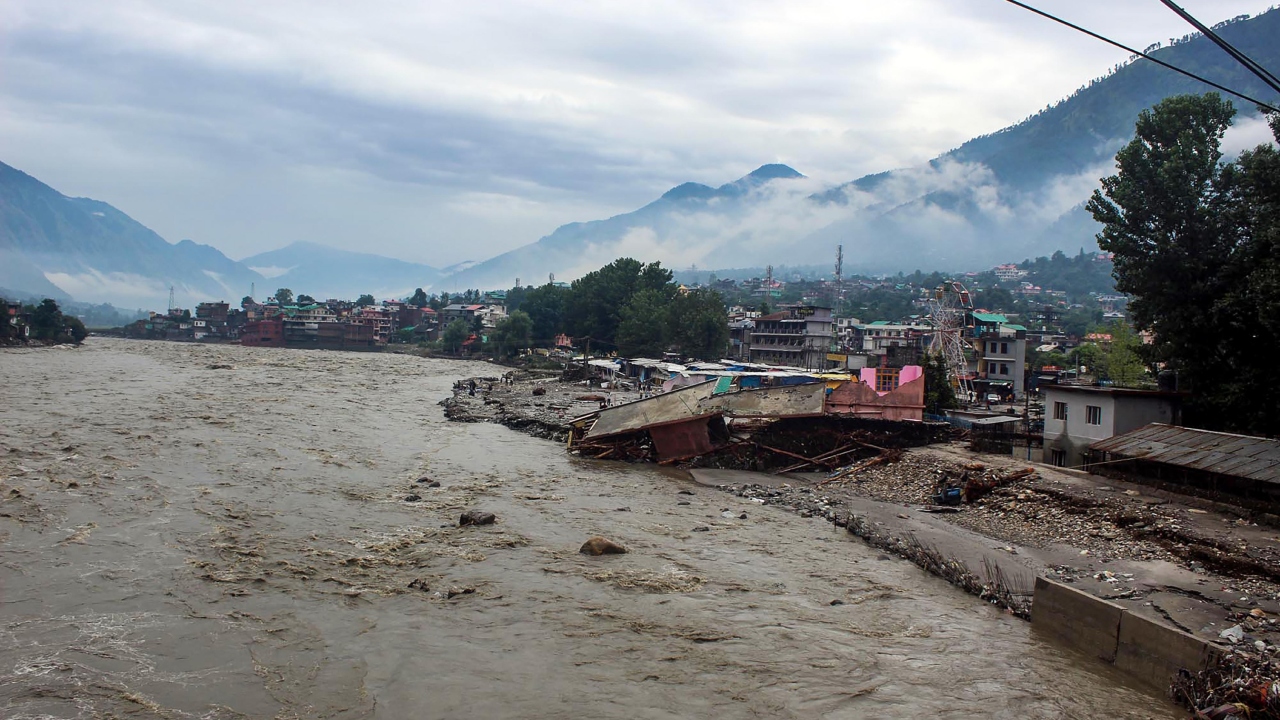
What started as a usual monsoon season in Himachal Pradesh has now become a traumatic tragedy. Persistent rains, enraged cloudbursts, and extensive flooding have devastated the state, taking the lives of 63 people and leaving 40 missing to date. The tragedy has caused enormous landslides, infrastructural destruction, and a large-scale rescue effort currently under way to rescue those trapped in far-flung and danger–prone zones.
The recurring Himachal Monsoon Fury has not only jolted the local inhabitants but also evoked urgent questions about climate resilience, preparedness, and sustainable development in vulnerable mountain areas.
Timeline of the Tragedy
The destruction occurred over a period of several days in late June and early July 2024. Catastrophic rain, amounting to almost twice the monthly average in certain districts, caused landslides, flash floods, and cloudbursts in districts such as Kullu, Mandi, Shimla, Chamba, and Solan.
Cloudbursts in Mandi and Kullu districts flattened houses and swept away bridges.
Landslides clogged major roads such as the Chandigarh–Manali and Hindustan–Tibet roads, isolating hundreds of villages.
Inundated rivers such as Beas, Ravi, and Satluj overspilled danger marks, consuming land, livestock, and incomes.
The severity and magnitude of the Himachal monsoon wrath caught locals and officials by surprise.
Human Cost and Emotional Fallout
As rescue teams sort through rubble and wreckage, the magnitude of human devastation keeps unfolding:
63 confirmed deaths to date, several caused by collapsed buildings, drowning, or entombment in landslides.
40 still missing, hopes fading in many a case due to the rugged terrain and persistent bad weather.
Thousands displaced from their homes, taking refuge in schools, relief camps, and community halls.
Children, the old, and the sick are the most vulnerable, and many are isolated from basic healthcare.
Survivors tell spine-chilling accounts of waking up to shaking hillsides or walls of water breaking into their homes. In some cases, entire families have been destroyed or torn apart, which makes this one of the saddest monsoons in Himachal Pradesh in recent history.
Rescue and Relief Activities
The rescue process in progress consists of various agencies, including:
The National Disaster Response Force (NDRF),
The State Disaster Response Force (SDRF),
Personnel of the Indian Army and Air Force
Local authorities and volunteers.
Helicopters, drones, and earthmoving machinery are being used to attempt to rescue stranded individuals, clear roads, and retrieve bodies. Temporary bridges are being constructed to restore connectivity between villages. Relief supplies—food, water, medicine, and clothing—are being dropped by air into inaccessible areas.
Nevertheless, challenges are still gargantuan:
Rain continues to impede air and ground operations.
Mobile communication and power lines are cut in much of the country.
Risk of additional landslides hangs over already unstable hillside.
In spite of all these challenges, the work of first responders, local NGOs, and volunteers has been excellent.
Environmental and Structural Triggers
Although the Himachal monsoon rampage is a natural phenomenon, experts opine that human activity has increased the extent of the damage:
Uncontrolled building in landslide-prone areas has rendered most homes and roads dangerous.
Burning of forests and illegal mining have compromised natural defenses.
Encroachments on riverbeds have enhanced flood risk.
Lack of proper drainage infrastructure has converted rainwater to floodwater in urban centers.
Decades of uncontrolled growth and non-enforcement of environmental standards have caught up with Himachal Pradesh.
The Climate Crisis Connection
The increasing frequency and severity of extreme weather events in the Himalayas indicate a broader pattern: climate change has arrived.
Meteorologists and climatologists attest that increasing temperatures are making the Indian monsoon more unpredictable. Warm air can contain more moisture, leading to heavier, more abrupt rain showers. Coupled with glacial melts and changing wind patterns, this leads to cloudbursts and flash floods.
Himachal Pradesh, being topographically steep and geologically fragile, is especially vulnerable. Unless immediate action is taken, such catastrophes can become the new norm instead of occasional exceptions.
The Cost to Economy and Infrastructure
The financial burden of this season’s monsoon tragedy is sure to be astronomical:
Road destruction alone is projected in the hundreds of crores.
Tourism, one of Himachal’s major industries, has been brought to a standstill during the peak tourist season.
Agriculture, particularly apple orchards and cash crops, have faced major losses.
Hydroelectric power plants and power transmission lines have been damaged or closed down, resulting in energy shortages.
These effects will have a knock-on effect on the state and local economy for months, perhaps even years.
Government Response and Public Reactions
The government of Himachal Pradesh has declared compensation for the bereaved families and affected. Chief Minister Sukhvinder Singh Sukhu has urged the central government for immediate funds and also international aid.
Yet, there is mixed sentiment in the public. Several residents and activists blame the authorities for disregarding early warnings and not preparing well. A lack of evacuation exercises, inadequate maintenance of drainage infrastructure, and a lack of early warning systems in outer areas have all been condemned.
A Call for Preparedness and Sustainable Development
What should have happened this monsoon must now be remembered as a strong lesson that resilience has to be developed, not taken for granted. While the state struggles in the face of Himachal monsoon wrath, long-term measures are the need of the hour:
Improved urban planning, with environmental risk analysis at its centre.
Replanting and watershed conservation, to enhance natural buffers.
Public education and disaster literacy, particularly among vulnerable populations.
Investment in forecasting technology and real-time warning systems for cloudbursts and landslides.
Policies balancing growth with sensitivity to nature are no longer a choice—they are a must.
Conclusion
Himachal Monsoon Fury: 63 dead, 40 missing in cloudbursts, rains; rescue underway is more than a headline. It‘s a cry for alarm from the hills. Nature has flexed its muscle, and it’s also casting back at us the cost of our decisions.
In remembrance of those who perished and in hope for those who remain missing, the moment has arrived for Himachal Pradesh, and India as a whole, to transition to a model of development that is respectful to the environment, places a high value on safety, and anticipates the unpredictable threats of the climate age.
At AB PROPERTIES.IN, we standout as a top real estate advisory firm in Siliguri based on our unshakeable focus on excellence and customer satisfaction. Here’s why selecting us guarantees a smooth and satisfying property experience:
1. Extensive Market Knowledge
Our experts have an extensive knowledge of Siliguri’s property market, particularly prime locations such as Sevoke Road, Matigara, and Hakim Para. Based on this expertise, wearable to present realistic market reviews and recommend investment choice customized for you.
2. In-Depth Service Offered
We provide a complete range of real estate services, from property acquisition and sale to investment advice, legal consultation, and property management. This comprehensive process guarantee sale your real estate requirements are met in one place, marketing easy and time-saving.
3. Client-Centric Approach
Your satisfaction is of the highest concern to us. We invest the time necessary to learn your distinctive needs and strive hard to surpass your expectations, making certain that each transaction willmeet your aims and wishes.
4. Honesty and Openness
We maintain the utmost standards of integrity and honesty in all our activities. From transparent communication to plain and simple negotiations, you can rely on us to deal with your property interests with the highest integrity.
5. Powerful Network and Relationships
Relying on our vast network of developers, legal professionals, and financial planners, we give you the leverage of useful resources and contacts, improving your property experience and providing solutions to every issue that can crop up.
6. Track Record
Our track record of successful deals and happy customers says a lot about our commitment and efficiency. We have always enabled profitable deals, which has made us a go-to real estate partner in Siliguri.
7. Personalized Guidance
We know that every client is unique. Our personalized guidance ensures that your individual needs are met, and you get customized solutions that suit your goals.
Contact Us: Shop No. 205, 2nd floor International Market Near Pani Tankin More Sevoke Road Siligur W.B.-734001.
ask@propertiesab.com
abproperties.in@gmail.com
Facebook
Twitter
Youtube
Pinterest
Threads
Linkedin
Instagram